Things to Do in Almaty
Apple orchards, Soviet mosaics, and mountains that catch fire at sunset
Top Things to Do in Almaty
Find activities and tours you'll actually want to do. Book through our partners -- no booking fees.


Plan Your Trip
Essential guides for timing and budgeting
Climate Guide
Best times to visit based on weather and events
View guide →Day Trips
The best excursions and nearby destinations worth the journey
Explore day trips →Where to Stay
Best neighbourhoods, hotel picks, and booking tips
Find hotels →Travel Insurance
What's required, what coverage matters, and how to get a quote
Read guide →What to Pack
Climate-specific gear, essentials, and what to leave at home
See packing list →When Should You Visit Almaty?
Tap a month for weather, crowds, and highlights
View full year-round climate guide →Explore Almaty
Altyn Emel National Park
Day trip
Big Almaty Lake
Day trip

Charyn Canyon
Day trip
Ile Alatau National Park
Day trip
Issyk Lake
Day trip
Kapchagai Reservoir
Day trip
Kolsai Lakes
Day trip
Shymbulak Ski Resort
Day trip
Tamgaly Tas
Day trip
Turgen Gorge
Day trip
Almaty Central Park
Landmark
Almaty Zoo
Landmark
Ascension Cathedral
Landmark
Green Bazaar
Landmark
Kok Tobe Hill
Landmark
Medeu Ice Skating Rink
Landmark
Panfilov Park
Landmark
Republic Square
Landmark
Your Guide to Almaty
About Almaty
Almaty greets you with grilled shashlik drifting from Panfilov Park at 7 AM. Pensioners flow through tai chi beneath candy-colored Soviet mosaics. This is Kazakhstan's cultural capital. The snow-capped Tian Shan mountains loom close enough to touch from Dostyk Avenue coffee shops. The 1970s metro stations resemble underground palaces dressed in bronze and marble.
Old town around Green Bazaar still runs on grape-leaf time. Vendors at dried fruit stalls insist you taste their apricots before buying. A handful of walnuts costs 200 tenge (about 50 cents). Ride the Shymbulak cable car for 4,500 tenge ($10) up in Medeu Valley. Ski slopes stay open until May. Downtown in Arbat, teenagers film TikTok dances in front of a statue of a man playing the dombra.
Winter is the catch. Temperatures drop to -15°C (5°F) from November to February. Smog settles in the valley. Your snot will freeze walking between bars on Gogol Street. Summer brings 35°C (95°F) days. The mountains stay cool. Apricot season makes the entire city smell like jam. This is Central Asia's most cosmopolitan city.
Eat Korean-Kazakh lagman for 1,200 tenge ($3) in one neighborhood. Drink $12 natural wine from Georgia in another. Come just to see what happens when Soviet planning meets Silk Road trading routes meets modern Kazakhstan oil money.
Travel Tips
Transportation: The metro costs 80 tenge (20 cents). Trains run from 6 AM to midnight every 3-4 minutes. Download the Yandex Go app before you land. It is the local Uber and works better than hailing random taxis. Random drivers will quote 3,000 tenge ($7) for a 500 tenge ride. From the airport, the #79 bus costs 150 tenge (35 cents). It drops you at Sayran bus station in 45 minutes. Airport taxis start at 6,000 tenge ($14). Walk 100 meters away from arrivals and negotiate down to 3,500 tenge.
Money: Cash is king. Green bazaar vendors and most restaurants outside hotels do not take cards. ATMs from Kaspi Bank and Halyk Bank charge no fees. Citibank will hit you with $5 per withdrawal. Airport exchange rates are terrible. Wait until downtown. Exchange offices on Furmanov Street stay within 1 tenge of the bank rate. The local trick is Kaspi bank's orange payment terminals. Even old ladies selling tomatoes accept Kaspi transfers.
Cultural Respect: Take your shoes off when entering homes and some older restaurants. Slippers pile by the door. Never point your feet at people. Do not show the soles of your shoes when sitting. At Orthodox churches like Ascension Cathedral, women cover heads and shoulders. Learn the basic Kazakh greeting 'Salem' instead of Russian 'Privet'. Locals love the effort. They may drop the tourist surcharge. Tea culture is serious. Refusing tea is rude. Leave a sip in your cup to signal you are finished.
Food Safety: The dairy products are memorable. Try kumis (fermented mare's milk) from Green Bazaar for 500 tenge ($1.20). Sip slowly. It is an acquired taste. Street food is safe if it is hot and busy. Shashlik carts outside Kok Tobe cable car station serve lamb skewers for 800 tenge ($1.90). Locals queue at lunch. Avoid sliced melon sold in plastic bags. Eat where you see families. Tap water is technically safe. It tastes like chlorine. Buy 5-liter bottles from any convenience store for 300 tenge (70 cents).
When to Visit
Almaty's weather follows mountain logic more than desert logic. April and May are pure gold. Days hit 20-25°C (68-77°F). Apple orchards bloom and give the city its name. Hotel rates stay 30% below summer peak. June through August brings 30-35°C (86-95°F) in the city. Medeu stays 15°C cooler. Hike or ride the cable car for 4,500 tenge/$10 to escape the heat.
Prices spike 40%. Book hotels two weeks ahead. September into early October paints the mountainsides gold. Locals hunt edible mushrooms in Ile-Alatau National Park.
Winter is a different beast. November starts cold at -5°C (23°F). January hits -15°C (5°F). Temperature inversions trap the city under thick air. Hotels drop 50% from summer rates. Ski Shymbulak for 7,000 tenge ($16) on weekdays. Dry powder and empty slopes await. February brings Kazakh New Year celebrations with kokpar horse games and baursak fried bread.
March surprises. Still ski season at elevation. Town warms to 15°C (59°F). Ski in the morning. Drink coffee in a sundress by afternoon. Rain tourists skip March. Hotels drop 60%. Restaurants welcome anyone. Nauryz celebrations around March 21 turn Republic Square into a massive feast. Free food stalls and traditional music fill the air.
Book flights for April-May or September-October. Weather and prices align well. Summer flights from Europe cost $800-1,200. Shoulder seasons drop to $500-700. Winter flights are cheapest at $400. Pack wool. Temperatures will test your relationship with it.
Frequently Asked Questions
How Many Days Should I Spend in Almaty?
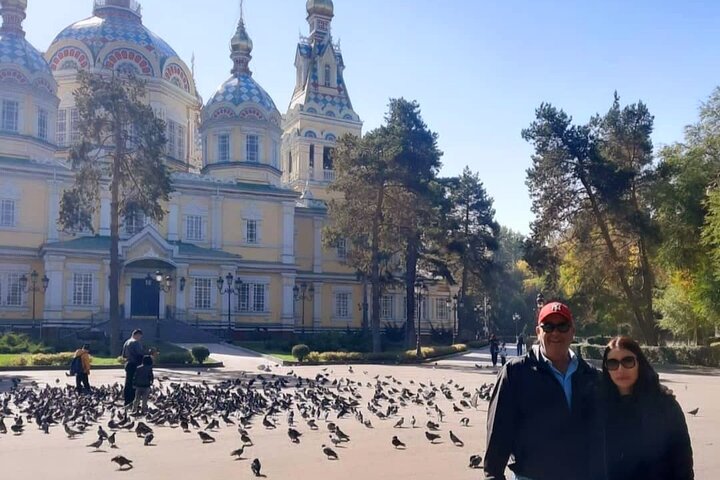
Three to four days lets you cover the main sights without rushing. That's enough time for Panfilov Park and Zenkov Cathedral, a day trip to either Medeu and Shymbulak or Big Almaty Lake, exploring the Green Bazaar and Kok-Tobe, and a walk through the modern Esentai district. If you're into hiking or want to visit Charyn Canyon (three hours east), add another two days.
What's the Best Time of Year to Visit Almaty?
Late April through June and September through early October offer the best balance, mild weather, clear mountain views, and fewer crowds. Summer (July, August) is warm but can get over 30°C, and popular spots like Big Almaty Lake fill up on weekends. Winter (December, March) is cold but ideal if you're here for skiing at Shymbulak, where the season runs November to April.
Is Almaty Safe for Tourists?
Yes, Almaty is generally safe, in central areas like Panfilov Park, Arbat Street, and the Esentai district. Petty theft can happen in crowded places like the Green Bazaar or on public transport, so keep valuables secure. Avoid walking alone late at night in poorly lit residential neighborhoods, and use official taxis or ride apps like Yandex Go rather than unmarked cars.
How Much Does a Meal Cost in Almaty?
A filling meal at a local spot like a stolovaya (cafeteria) runs 1,500, 2,500 tenge ($3, 6), while mid-range restaurants charge 4,000, 8,000 tenge ($9, 18) per person. Higher-end places in the Esentai or Dostyk Plaza areas can reach 12,000, 20,000 tenge ($27, 45). Street food like samsa or lagman from vendors near Zelyony Bazaar costs around 500, 1,000 tenge ($1, 2).
How Do I Get from the Airport to the City Center?
Almaty International Airport is about 15 km northeast of downtown. The cheapest option is bus 79 or 92 (150, 200 tenge, roughly $0.40), which takes 45, 60 minutes depending on traffic. A taxi or Yandex Go ride costs 2,000, 3,500 tenge ($4.50, 8) and takes 20, 30 minutes. Avoid unmarked taxis at arrivals, use the official taxi desk or the app.
What's the Easiest Way to Visit Big Almaty Lake?
Big Almaty Lake sits about 28 km south of the city at 2,500 meters elevation. The easiest option is joining a half-day tour (around $30, 50 per person), which includes transport and sometimes a stop at Kok-Zhailau meadow. If you rent a car, the road is paved but narrow and winding. Public transport doesn't go all the way, so you'd need a taxi from the nearest bus stop, which can be tricky to arrange for the return.
Can I Use US Dollars or Euros in Almaty?
No, you'll need Kazakhstani tenge for almost everything, restaurants, taxis, shops, and attractions. ATMs are widespread in the city center and accept Visa and Mastercard, and exchange offices (called "обмен валют") offer decent rates, near Republic Square or along Furmanov Street. Some high-end hotels may quote prices in dollars, but they'll still expect payment in tenge.
Is It Worth Visiting Shymbulak If I'm Not Skiing?
Yes, the gondola ride from Medeu to Shymbulak offers spectacular views year-round, and the resort sits at 2,200 meters with trails and cafes. In summer and fall, you can hike to higher elevations or just enjoy the mountain scenery. The cable car costs around 3,000, 5,000 tenge ($7, 11) roundtrip. Weekends get crowded, so go on a weekday morning if you can.
What Should I Buy at the Green Bazaar?
The Green Bazaar (Zelyony Bazaar) is the best place for dried fruits, nuts, honey, kurt (dried cheese balls), and spices, if you're stocking up for gifts. You'll also find fresh produce, meat, and traditional snacks. Prices aren't marked, so bargaining is expected. Go in the morning for the freshest selection, and bring cash in small bills.
How Cold Does Almaty Get in Winter?
December through February sees daytime highs around -2°C to -8°C (19°F to 28°F), with nights dropping to -10°C to -15°C (5°F to 14°F). Occasionally it dips below -20°C (-4°F), in January. The city itself is manageable with layers and a good coat. But mountain areas like Shymbulak are significantly colder. Snow is common but not constant, some winters are drier than others.
Are Credit Cards Widely Accepted in Almaty?
Credit cards work at most hotels, larger restaurants, shopping malls, and chains. But smaller cafes, markets, taxis, and street vendors are cash-only. Visa and Mastercard are more common than Amex. Always carry tenge for buses, snacks, and tips. Contactless payment is available in some newer establishments, around Dostyk Avenue and Esentai Mall.
More Ways to Experience Almaty
Tours, day trips, and local experiences curated by on-the-ground operators.
Didn't see anything interesting yet?
Browse Viator's full catalog of tours, day trips, food experiences, and private guides in Almaty.
See All Almaty Tours on Viator